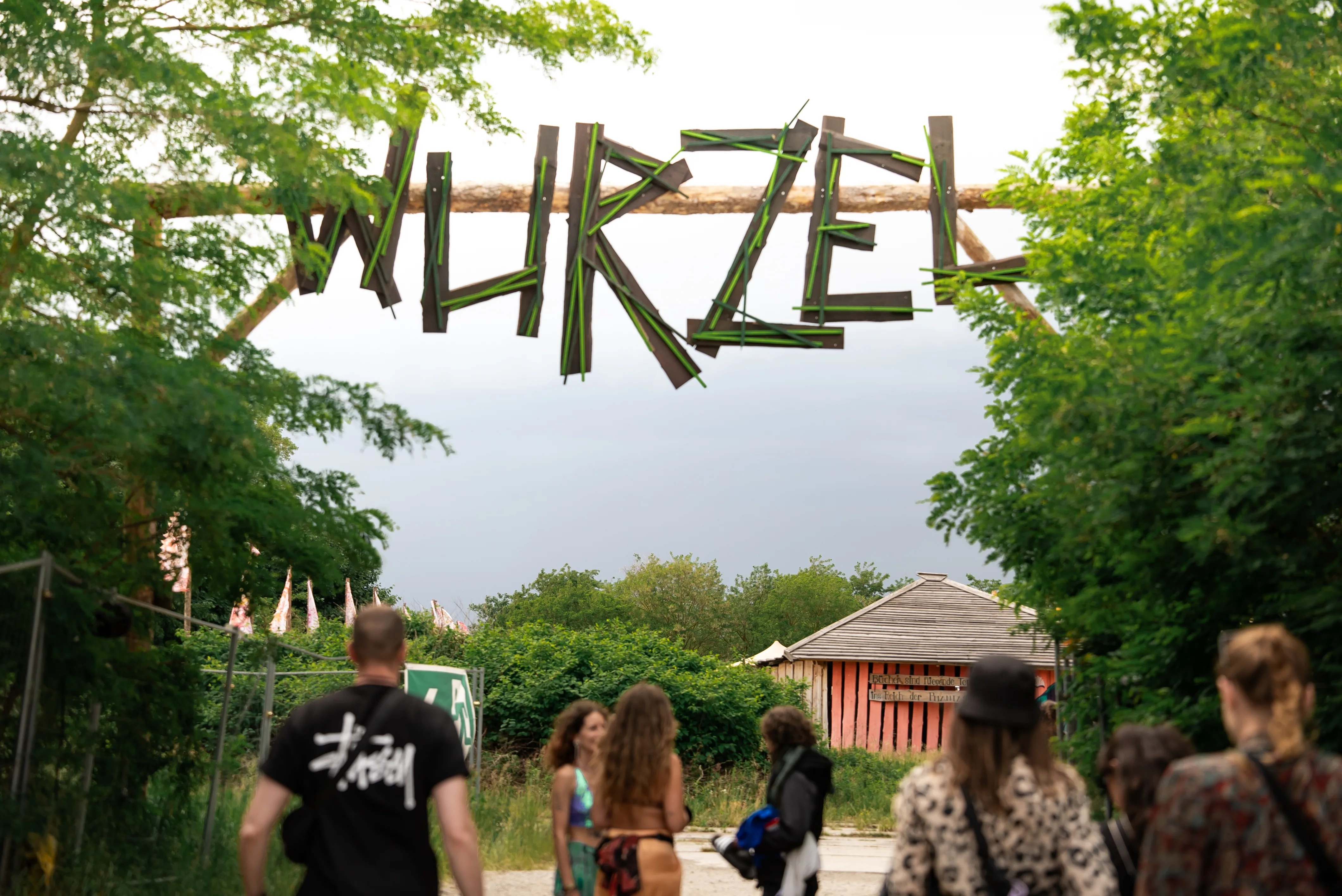
Zurück zu den Wurzeln Festival
A conversation with Andreas Schropp, COO, Zurück zu den Wurzeln Festival
Three months before festival season, Andreas Schropp — COO of Zurück zu den Wurzeln Festival — is already deep in contracts, bookings, and the particular controlled chaos that comes with running a 6,000-person underground event. Wurzel, as it's known, takes place each June on a forested site in Brandenburg, built on ten values that run from sustainability and inclusion to something rarer: the feeling that the people who made it are still there, walking among you. We spoke to Andreas about what those values actually look like on the ground, why dancing in a forest feels fundamentally different from dancing on concrete, and how a group of friends with a garden became one of Germany's most distinctive underground festivals.
"It still feels like a group of friends who said, 'Hey, I've got a garden, let's throw a party.' Just a slightly larger garden."
— Andreas Schropp, Zurück zu den Wurzeln Festival
Your name is your programme. Wurzel is known for its ten core values — sustainability, inclusion, community. How do you make sure these don't just exist on paper but are genuinely felt by every guest on the ground?
Honestly, we don't overthink it — we just do it. These values are so embedded in how we operate that they find their way into everything automatically. We make it clear from the start to DJs and suppliers: we're a small festival, a participatory festival. If you're only here for a prime slot and a fee, we're probably not the right fit.
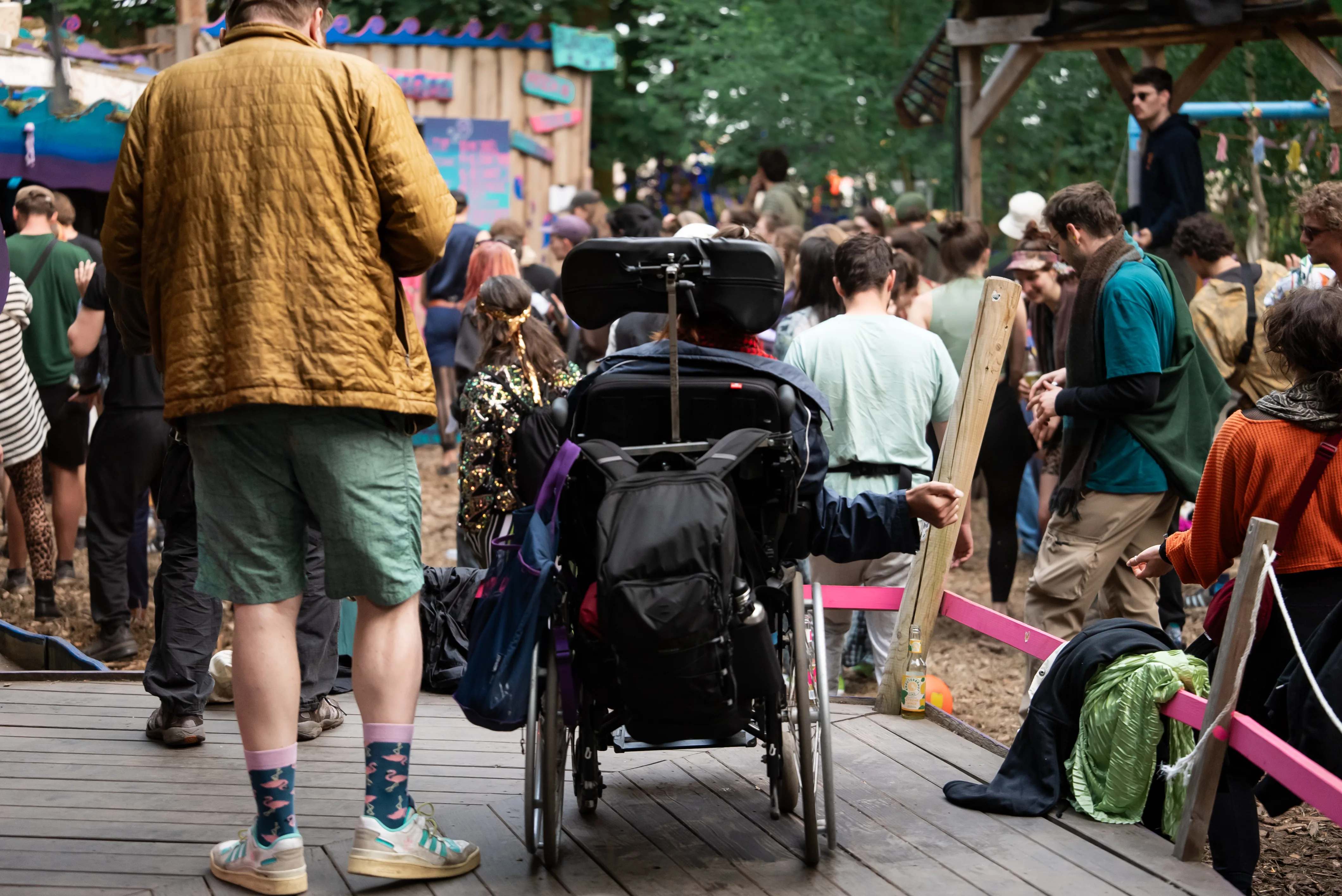
For sustainability, we have Psyclean on site with volunteers who run around showing how easy it is to pick up litter or hand out pocket ashtrays. On inclusion, we're in constant dialogue with people with disabilities, who help us identify what needs changing before the festival even opens. Because we live these values ourselves, they come through naturally.
Your site is legendary for its hidden floors and handmade art installations. How would you describe the energy of dancing in a forest setting to someone who's only ever experienced commercial festivals on concrete?
I'd probably start by pointing out what the alternative is. You spend every day in a city — concrete, cars, buildings. Why then go somewhere for escapism that's just more of the same? There's something — and I know this might sound a little esoteric — about being in a forest that lets you reconnect with something essential. Back to the roots, as the name says.
The big commercial festivals can still have incredible lineups. But at the last one I went to, the sun was hammering down off concrete, no shelter anywhere, and every time you stopped dancing you were funnelled straight back to the bar. At Wurzel it feels different — like someone actually thought about you. And I think that's what more and more people are looking for.
With nine floors and a genuinely broad range — techno, reggae, drum & bass and more — how do you create cohesion across all of that?
For years that was down to our booker Danny, who had an extraordinary bird's-eye view over everything — a real instinct for how it all fit together. He passed away in November, which has been a huge loss for us. We've had to redistribute that responsibility, and long-standing crews who've been part of specific floors for years now have more autonomy. We've essentially told them: do it the way Danny would have wanted.
It works because the people around us have become like family over the years. They know what Wurzel stands for. We didn't build this festival with hired strangers — we built it with friends, and that's still how it runs.
Wurzel has become something of a trailblazer on accessibility — from adapted bar counters to ongoing dialogue with disability advocates. Why is this so central to the festival's identity, and what's the most memorable feedback you've received from someone who felt genuinely included?
The inclusion mindset comes straight from my boss Chris. Whatever we're talking about, he always brings it back to that. For me personally, I've had contact with people with disabilities since I was young, so it always felt normal — but I've come to understand how often it gets overlooked everywhere else.
At a festival, where we're building our own small city for four days, we have the chance to actually get it right. One small example: we cut one of our bar containers lower so someone in a wheelchair can order at the counter like anyone else, instead of craning to look over it.
The most moving moment I remember: friends of mine were dancing at the Disco Floor in the morning, and a group of people with learning disabilities joined them. Everyone danced together. My friends came back from that and said: now we understand what the Wurzel actually is.
For international visitors discovering German festivals for the first time — what is your best argument for why Wurzel is the most authentic experience in the German underground scene right now?
I'd say we're still the most approachable. At other festivals, you arrive and you never see anyone who actually runs it. At Wurzel, I'm walking the site the entire weekend, talking to whoever wants to talk — same with my boss. We're not locked in an office somewhere.
And the way we actually build the festival: we don't hire cheap labour. We bring in volunteers who get a real experience in exchange, who understand what we're about, who feel part of it. It still feels like a group of friends who said, "Hey, I've got a garden, let's throw a party." Just a slightly larger garden.
Beyond the music, Wurzel runs workshops on everything from craft to social topics. Do you see attendees as guests — or as active co-creators of the festival?
The idea has always been that it should be a mutual thing. We don't present workshops from the top down. It's more: here's a bit of our philosophy, see if it resonates. We've had a sustainability bingo running for the last few years — a way to make the values tangible and playful.
This year we're introducing live feedback sessions where Chris and I sit down with whoever wants to talk and genuinely listen to what we got wrong. And we're opening one of the smaller floors for a night to emerging acts — anyone can apply for a slot. The closer you are to the people, the more included they feel. And the better the festival becomes.
People say you haven't truly experienced Wurzel until you've got lost in it. Is there a hidden corner or detail on the site that even regulars often miss?
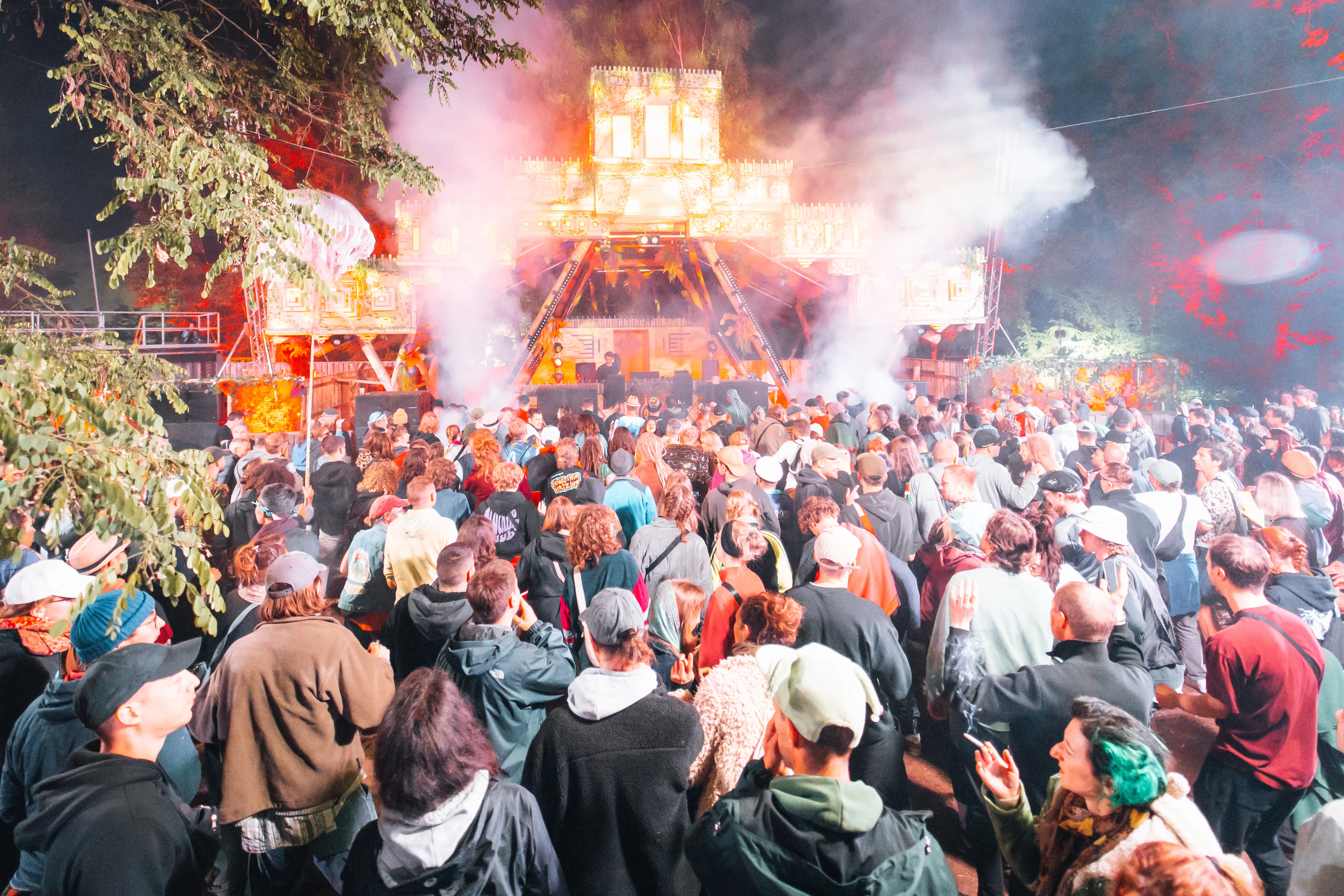
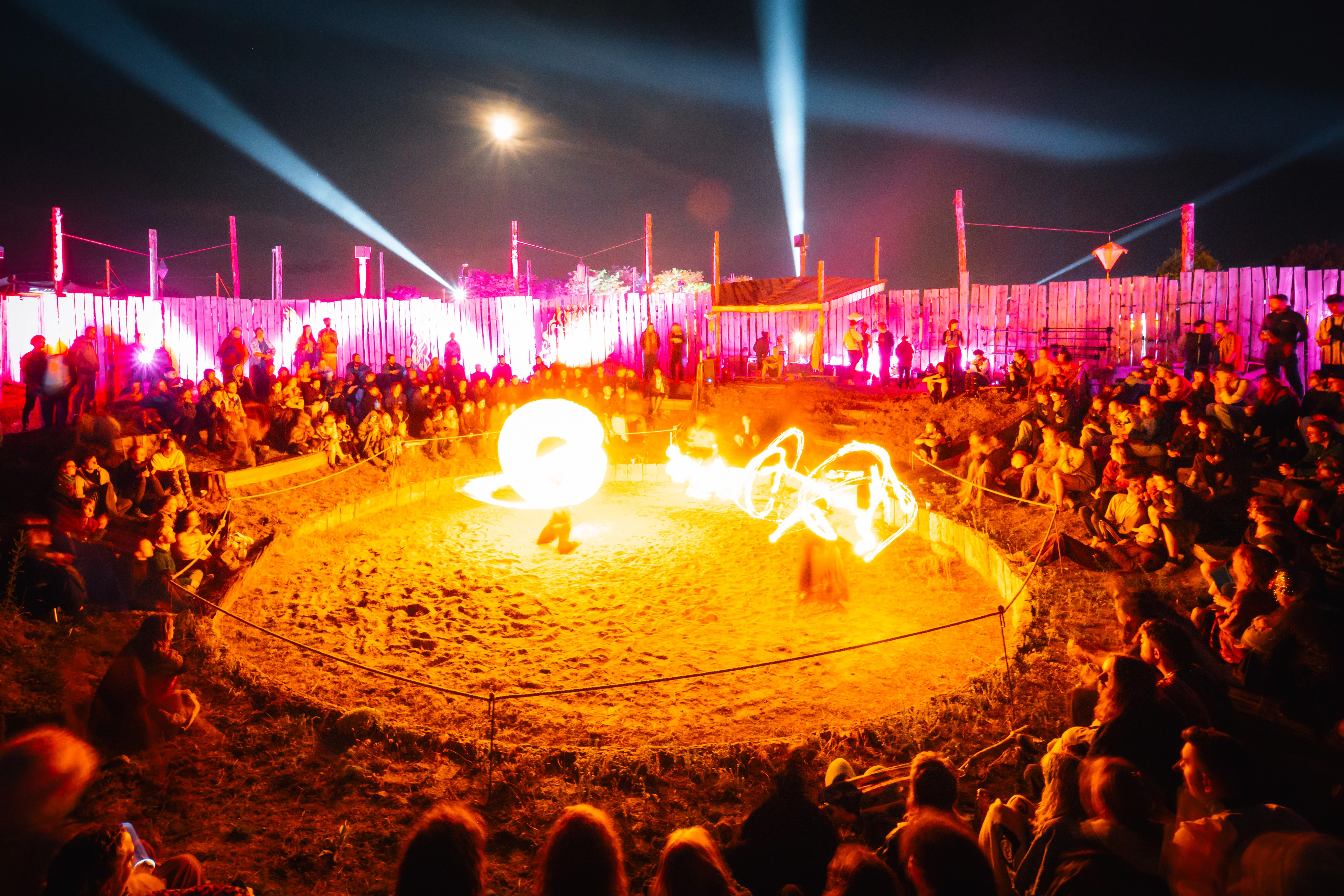
This is my fifth Wurzel and I know every patch of ground by now. But even I haven't made it to Chill im Hai — it's further away, downtempo, and somehow I've never had time. A friend of our late booker plays there and has been searching for the Secret Flow for two years and still hasn't found it.
That's the thing: people come back and compare their Wurzel — I was here, I found this, where were you? Everyone has a completely different experience of the same four days. If you've been to Wurzel once, you still haven't seen everything. There are too many small, hidden things. And that's exactly what makes people come back.
Explore on Festival Abroad
Zurück zu den Wurzeln Festival
Full lineup, dates, location details, and planning guide — everything you need to plan your trip to Zurück zu den Wurzeln Festival in Germany.
Features — Festival Abroad
Conversations with the people who build the world's best festivals.
Explore all festivalsRunning a festival? Let's talk.
Interested in editorial coverage for your event on Festival Abroad? Get in touch.
An independent electronic music & festival researcher with 10+ years in the global dance scene.
