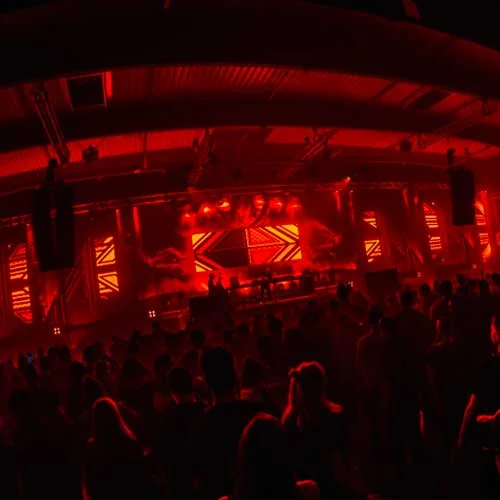
Eastern Europe
Festival Report 2026
Eastern Europe's festival circuit reaches new heights in 2026, with 165 events spanning nine countries from Poland's industrial warehouses to Georgia's mountain plateaus. The region has firmly established itself as Europe's electronic music powerhouse, with techno claiming 71 festivals—more than any other genre worldwide. Poland dominates with 48 events, whilst the Czech Republic follows closely with 40, creating a festival corridor that attracts millions of international revellers annually.
Sarah Pagel · 3 April 2026
The summer surge is unmistakable, with July hosting 59 festivals alone—over a third of the year's total activity. This concentration creates an unparalleled density of choice, from intimate 500-capacity underground gatherings like Techno Wall at Prague's Urbana Club to massive 15,000-strong productions such as Don't Let Daddy Know Poland at Gdansk's ERGO Arena. The region's appeal extends beyond electronic music, encompassing everything from Let It Roll Winter's drum & bass legacy to March Music Days' classical offerings in Bulgaria's Opera Ruse.
By the Numbers
Here's how Eastern Europe's 2026 festival season breaks down across 9 countries – every figure drawn from our live database.
By Country
By Month
Top Genres
The Numbers Behind Eastern Europe's Festival Explosion
Eastern Europe's 165 festivals represent a 23% increase from 2025, cementing the region's position as continental Europe's fastest-growing festival market. The geographic spread reveals fascinating patterns: whilst eight countries host events, Poland and Czech Republic account for 88 festivals—over half the regional total. This concentration reflects both countries' robust festival infrastructure and their strategic positioning within Europe's transport networks.
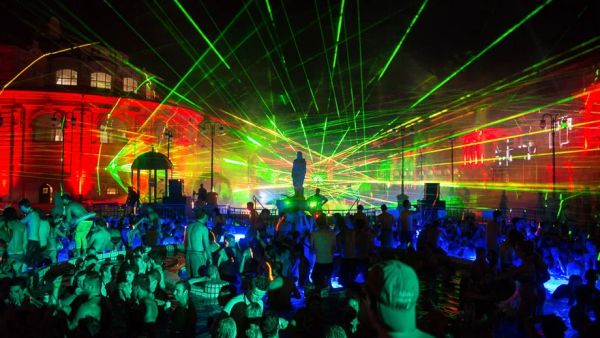
The average festival duration of 6.5 days significantly exceeds Western European norms, with events like Cinetrip Sparty extending an extraordinary 334 days at Budapest's Szechenyi Thermal Bath. This extended format allows for deeper cultural immersion and better value for international visitors. Camping remains integral to the experience, with 43% of festivals offering on-site accommodation—crucial given the rural locations of many events.
Capacity planning reveals sophisticated market segmentation. Intimate venues like Techno Wall (500 capacity) and Let It Roll Winter (3,000) focus on curated experiences, whilst flagship events such as Don't Let Daddy Know Poland (15,000) and Dystopia Festival (12,000) target mainstream audiences. Only 3% of festivals maintain free admission, reflecting the region's maturation from grassroots gatherings to professionally managed productions requiring substantial investment in production values and international artist bookings.
When to Experience Eastern Europe's Festival Calendar
July emerges as the undisputed festival month, hosting 59 events across the region—more than double June's 28 festivals. This concentration aligns with optimal weather conditions and European holiday patterns, creating intense competition for audiences and accommodation. Smart festival-goers should secure bookings 4-6 months in advance for July events, particularly in Poland and Czech Republic.
The summer trilogy of July, June, and August accounts for 114 festivals—69% of annual activity. August's 27 festivals offer marginally better value and availability, whilst June provides the sweet spot of warmer weather without peak pricing. Spring presents compelling alternatives, with March's 11 festivals including standouts like March Music Days in Bulgaria and SnowFest Festival's unique ski resort setting at Amfiteatr i Skocznia Skalite.
Winter programming, whilst limited to 10 festivals across December, January, and February, delivers exceptional value. Events like X-Massacre Festival and Tranceformations in February capitalise on indoor venues and lower accommodation costs. The shoulder months of May (12 festivals) and September (6 festivals) reward flexible travellers with better prices and more intimate atmospheres, though weather becomes increasingly variable after August.
Poland and Czech Republic Lead the Regional Festival Charge
Poland's 48 festivals establish it as Eastern Europe's undisputed festival capital, leveraging world-class venues from Wroclaw's Hala Stulecia to Warsaw's ERGO Arena. The country's festival ecosystem spans intimate club nights to major productions, with events like Don't Let Daddy Know Poland demonstrating Poland's ability to attract premium international brands. Geographic diversity ranges from Baltic coastal festivals to mountain venues, supported by excellent rail connections and competitive accommodation rates.
Czech Republic's 40 festivals benefit from Prague's status as a festival tourism hub, with venues like O2 universum hosting established brands such as Let It Roll Winter. The country's central European location and UNESCO World Heritage sites provide compelling reasons to extend festival trips into cultural exploration. Hungary's 25 festivals punch above their weight, with unique venues like Szechenyi Thermal Bath offering experiences unavailable elsewhere in Europe.
Romania contributes 21 festivals, with mountain venues like Pârtia Bradul plateau hosting events such as Massif Festival, capitalising on dramatic alpine settings and lower operational costs. Bulgaria's 13 festivals include culturally significant events like March Music Days, whilst Slovakia's 9 festivals focus on boutique experiences. Moldova and Ukraine, despite challenging circumstances, maintain 4 festivals each, demonstrating the region's resilience and music's unifying power across political boundaries.
Techno Dominance Defines Eastern Europe's Sound
Techno's commanding lead with 71 festivals reflects Eastern Europe's historical connection to underground electronic culture and its post-industrial urban landscapes. This represents 43% of the regional total, significantly higher than Western Europe's 28% techno representation. Venues like Stara Rzeznia and UnderZone Garage provide authentic industrial settings that Western promoters struggle to replicate in regulated markets.
Rock maintains surprising strength with 54 festivals, whilst hip hop's 52 events demonstrate the genre's growing Eastern European presence. Pop's 51 festivals indicate mainstream commercial viability, supported by the region's large domestic markets and relatively affordable ticket pricing. The electronic music spectrum expands through EDM and House (41 festivals each) and Deep House (37 festivals), creating comprehensive programming for electronic music tourists.
Genre crossover events increasingly dominate programming strategies, with festivals like Massif Festival combining EDM, rap, and trap to maximise audience appeal. Indie rock's 31 festivals serve growing alternative scenes in university cities like Prague and Krakow. The data reveals Eastern Europe's evolution from techno-focused underground scenes to diverse, commercially viable festival markets capable of supporting multiple genres simultaneously whilst maintaining their electronic music heritage.
Must-Attend Festivals That Define the Regional Experience
Let It Roll Winter stands out as Eastern Europe's premier drum & bass destination, transforming Prague's O2 universum each February with 3,000 devoted fans celebrating the genre's finest artists. The event's winter timing creates unique atmosphere whilst avoiding summer competition. Don't Let Daddy Know Poland represents the region's mainstream electronic ambitions, bringing 15,000 revellers to Gdansk's ERGO Arena for premium EDM production values matching Amsterdam's original.
Dystopia Festival epitomises Eastern Europe's industrial techno heritage, utilising Warsaw's Stara Rzeznia for authentic underground atmosphere that attracts 12,000 hardcore enthusiasts each February. The venue's history as a functioning slaughterhouse provides unmatched authenticity for the genre's darker expressions. Cinetrip Sparty offers perhaps Europe's most unique festival experience, running 334 days at Budapest's historic Szechenyi Thermal Bath, combining electronic music with thermal spring relaxation.
Massif Festival capitalises on Romania's mountain tourism potential, hosting 12,000 attendees on Pârtia Bradul plateau for a multi-genre experience combining EDM, rap, and trap across 10 days. The alpine setting provides dramatic backdrops whilst showcasing Eastern Europe's geographic diversity beyond urban industrial venues. These flagship events demonstrate the region's maturation from underground scenes to internationally recognised festival destinations.
Navigating Eastern Europe's Festival Circuit
Warsaw Chopin, Prague Václav Havel, and Budapest Ferenc Liszt airports serve as primary gateways, with low-cost carriers providing excellent connections from major European cities. Budget airlines offer festival packages combining flights and accommodation, with Warsaw-London return flights averaging £120 during festival season. Regional rail networks, particularly between Prague, Warsaw, and Budapest, enable multi-festival touring with advance booking discounts of up to 40%.
Currency considerations span Polish złoty (PLN), Czech koruna (CZK), Hungarian forint (HUF), Romanian leu (RON), and Bulgarian lev (BGN), though most major festivals accept card payments. Typical festival ticket prices range £35-85 for multi-day events, representing exceptional value compared to Western European equivalents. Accommodation booking windows prove crucial—secure reservations 3-4 months ahead for July events, particularly in Prague and Warsaw where hotel capacity constraints drive prices up 200% during peak festival weekends.
Visa requirements remain straightforward for EU citizens, whilst non-EU visitors benefit from Schengen Area access enabling multi-country festival tours. Travel insurance becomes essential given the region's variable healthcare systems and adventure sports integration at mountain festivals like Massif Festival.
Eastern Europe Festival Map
Every pin is a festival. Click one to see dates, genre, and how to get there.
Loading map...
Eastern Europe Festivals 2026
Explore every event in the 2026 season, from opening weekend to the final closing party. See the full list →


Festivals by country in Eastern Europe
Explore by genre in Eastern Europe
Other regions

An independent music & festival researcher with 10+ years in the global dance scene.
3 April 2026
