Balkans
Festival Report 2026
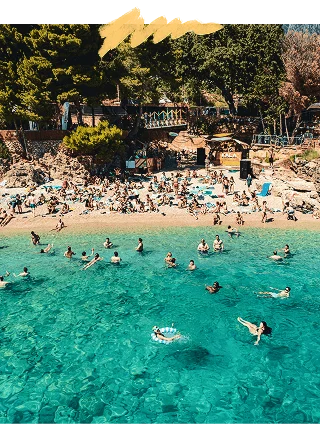
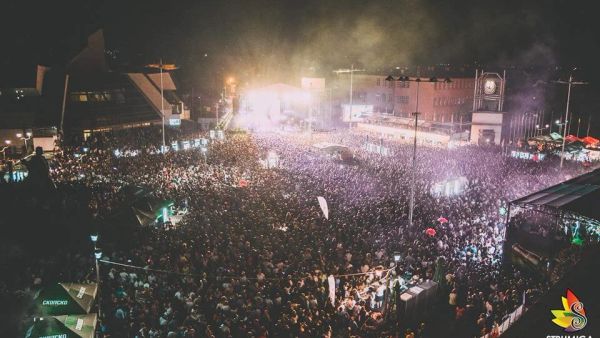
The Balkans have emerged as Europe's most exciting festival frontier, with our comprehensive database tracking 63 festivals across seven countries for 2026. From Ultra Europe's massive 100,000-capacity spectacle in Split to the intimate 3,000-person gathering at Kala Festival on Albania's pristine Dhermi Beach, the region offers unparalleled diversity for festival travellers.
Sarah Pagel · 3 April 2026
Croatia continues to dominate with 28 festivals, whilst Albania's explosive growth sees boutique events like UNUM and Anjunadeep Explorations joining the established Kala on the Albanian Riviera. The electronic music revolution is unmistakable—techno appears at 41 of the 63 festivals, transforming everything from Belgrade's warehouse spaces during No Sleep Festival's year-round calendar to the sun-soaked stages of Zrce Beach. Serbia's club culture, Slovenia's mountain retreats, and the Adriatic coast's beach venues create a festival ecosystem that rivals Ibiza and Amsterdam, but at a fraction of the cost and with far fewer crowds.
By the Numbers
Here's how Balkans's 2026 festival season breaks down across 7 countries – every figure drawn from our live database.
By Country
By Month
Top Genres
The Balkans Festival Scene: A Data Overview
Our 2026 database captures 63 festivals spanning seven Balkan countries, revealing a region where electronic music has fundamentally reshaped the cultural landscape. Croatia dominates with 28 festivals—representing 44% of the total—leveraging its stunning Adriatic coastline and established tourism infrastructure. Slovenia follows with 10 festivals, Serbia with 9, Bosnia & Herzegovina with 6, North Macedonia with 5, Albania with 3, and Montenegro with 2.
Electronic music's grip on the region is undeniable: techno appears at 41 festivals (65% of the total), whilst deep house and house combined account for 44 events. This electronic dominance extends from Croatia's mainstream EDM strongholds like Zrce Beach to Serbia's underground techno scenes. Belgrade's No Sleep Festival exemplifies this year-round commitment, running club nights from April through November with a 10,000 capacity across multiple warehouse venues.
Albania represents the region's most exciting growth story. Despite contributing just 3 festivals, the quality is exceptional—Kala Festival, UNUM, and Anjunadeep Explorations have transformed the Albanian Riviera into a boutique electronic music destination. Each event caps attendance below 5,000, creating an intimate atmosphere impossible to replicate at larger venues. The average festival duration across the region sits at 4.7 days, with 46% offering camping options—a crucial factor for budget-conscious travellers exploring multiple events.
When to Visit: Peak Season and Festival Calendar
July emerges as the undisputed peak month with 20 festivals, whilst the broader summer window of June through August accounts for 48 of the 63 festivals—a staggering 76% concentration. This clustering creates both opportunities and challenges: the weather along the Dalmatian coast is perfect (July highs averaging 28°C), but accommodation prices soar and booking lead times extend to 6 months for popular events like Ultra Europe.
June offers the sweet spot with 13 festivals, including Albania's trio of boutique events clustered in the first half of the month. Kala Festival (June 3-10), UNUM (June 4-8), and Anjunadeep Explorations (June 11-16) create a potential Albanian coast-hopping adventure for dedicated electronic music fans.
Shoulder season presents compelling alternatives for savvy travellers. April delivers 5 festivals, headlined by Ljubljana's MENT (February 18-21) and Sonica (April 12-15), both utilising the excellent Kino Šiška venue. These events offer significantly lower accommodation costs and authentic local experiences without the summer tourist crowds.
Winter festivals remain rare but noteworthy: Serbia's Green Love Festival in Novi Sad (February 13-14) provides a 5,000-capacity techno escape during Europe's coldest month. The February calendar includes just 4 festivals total, making these events particularly special for dedicated festival travellers seeking unique experiences.
Country by Country: Where the Action Is
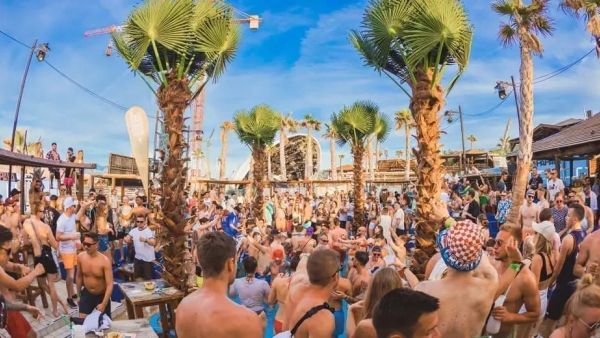
Croatia's 28 festivals leverage the country's tourism infrastructure and stunning coastline. Zrce Beach on Pag Island remains the epicentre, hosting Spring Break Island (May 22-26, 10,000 capacity) and numerous other EDM-focused events. Split anchors the south with Ultra Europe's massive July gathering, whilst Umag's Sea Star Festival (May 28-31, 28,000 capacity) offers a more manageable alternative. Floating Castle Festival in Osijek demonstrates Croatia's geographic diversity, utilising the historic Tvrđa Fortress for its June-July multi-stage electronic showcase.
Slovenia's 10 festivals punch above their weight in quality and innovation. Ljubljana's Kino Šiška venue hosts both MENT and Sonica, establishing the capital as the region's most important music industry hub. The country's mountain festivals offer unique alpine settings impossible to replicate elsewhere in the Balkans.
Serbia's 9 festivals centre on Belgrade's legendary nightlife scene. No Sleep Festival's April-November calendar transforms the city into a year-round electronic music destination, whilst venues like Silver Lake near Veliko Gradište (Srebrno Jezero Fest, May 1-3) offer camping-friendly alternatives outside the capital.
Bosnia & Herzegovina's 6 festivals remain arts-focused, with Sarajevo leading cultural programming that blends electronic music with broader artistic expressions.
Albania's explosive emergence cannot be overstated. Just 3 festivals, but each represents world-class curation: Kala's 8-day beach experience, UNUM's 5-day camping adventure, and Anjunadeep's branded showcase demonstrate how boutique events can challenge mega-festivals.
Montenegro's 2 festivals include the intimate Ondalinda residency at Herceg Novi's stunning Kanli Kula Amphitheater—700 capacity of pure Mediterranean magic.
The Music: Electronic Dominates, Rock Holds On
Techno's dominance at 41 of 63 festivals (65%) reflects the genre's perfect alignment with the Balkans' club culture and outdoor venue capabilities. Deep house and house combined appear at 44 festivals, creating substantial overlap that ensures electronic music fans will find their preferred sub-genres regardless of location.
The emergence of melodic techno as a distinct category—appearing at 15 festivals—signals the region's sophistication in electronic music curation. Albania leads this trend, with all three major festivals (Kala, UNUM, Anjunadeep) emphasising melodic and progressive sounds over harder techno styles.
Hip hop's presence at 18 festivals demonstrates successful cross-genre programming, whilst progressive house (17 festivals) and tech house (16 festivals) show how electronic music's sub-genres have found distinct audiences across the region.
Rock maintains relevance with 15 festivals, anchored by events like Taksirat Festival in Skopje's 15,000-capacity Boris Trajkovski Arena. Pop music appears at 14 festivals, often in mixed-genre events that attract broader audiences beyond electronic music devotees.
Reggae's appearance at 13 festivals reflects the Balkans' embrace of diverse musical cultures, particularly during summer beach events where the genre's laid-back vibes complement Mediterranean settings.
Croatia's Zrce Beach specialises in EDM and big room sounds perfect for massive outdoor crowds, whilst Serbia's underground techno scene—exemplified by No Sleep Festival's warehouse venues—offers grittier, more authentic club experiences. The currency landscape mirrors this diversity: 38 festivals operate in euros, simplifying travel logistics, whilst Serbian events use RSD, Bosnian festivals use BAM, and North Macedonia employs MKD.
Standout Festivals Worth Your Travel Budget
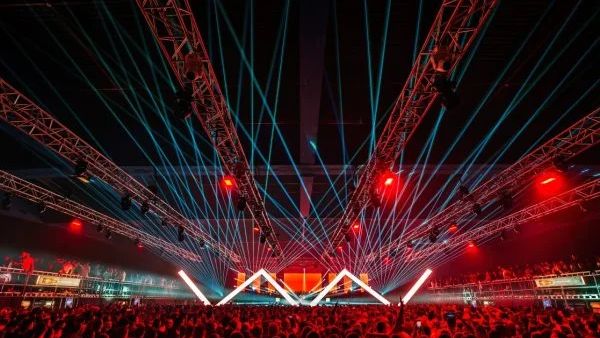
Ultra Europe in Split represents the region's festival crown jewel—100,000+ capacity across 3 days in July, featuring world-class EDM and techno acts in the historic Park Mladeži. The festival's massive production values and Split's stunning coastal setting create an unmatched spectacle, though accommodation books out 6 months in advance.
Sea Star Festival in Umag (May 28-31) offers a more manageable 28,000 capacity alternative with identical production quality. The 4-day event focuses on techno, house, and EDM without camping options, appealing to festival-goers preferring hotel accommodation and shorter travel distances from Western Europe.
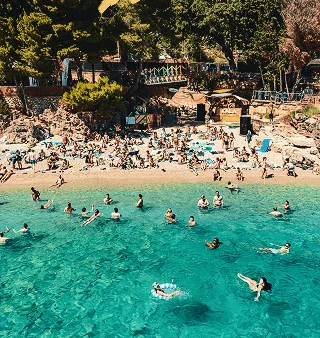
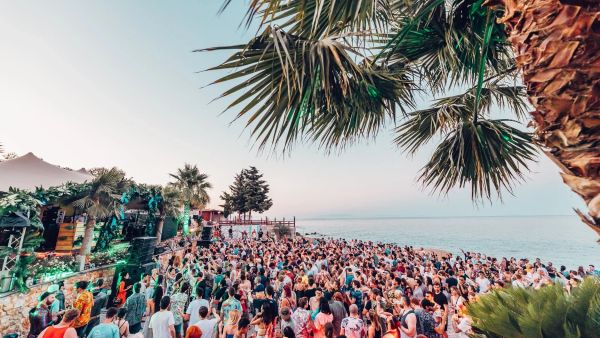
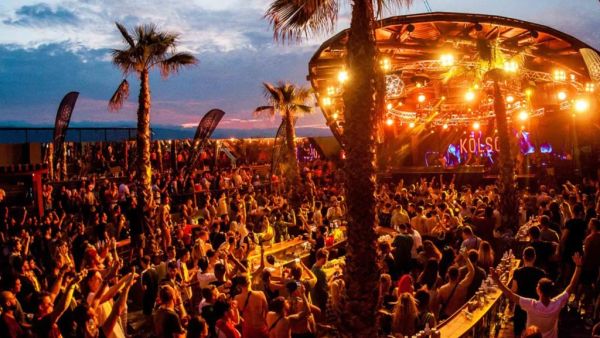
Albania's Kala Festival (June 3-10) delivers the ultimate boutique experience—8 days, 3,000 capacity on pristine Dhermi Beach. The intimate setting allows unprecedented artist-audience interaction, whilst the extended duration creates a temporary community impossible at shorter events. Techno, deep house, and melodic programming attract sophisticated electronic music fans.
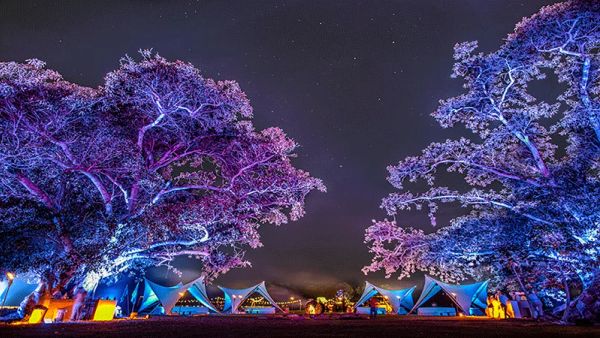
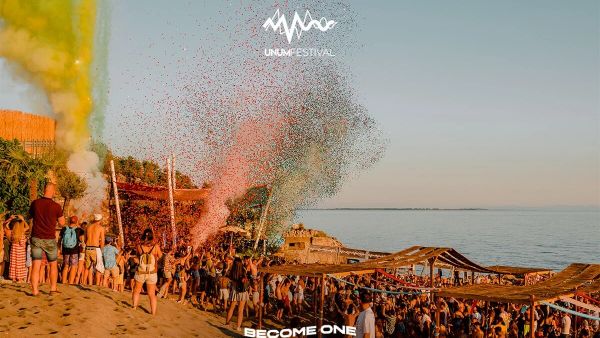
UNUM Festival (June 4-8) on Shëngjin Beach offers 5,000 capacity with camping, creating Albania's most accessible international event. The 5-day format and camping infrastructure attract budget-conscious travellers, whilst the techno and house programming maintains high curation standards.
Belgrade's No Sleep Festival runs year-round club programming with 10,000 capacity across multiple warehouse venues. This isn't a traditional festival but rather a season-long underground experience, perfect for travellers seeking authentic club culture rather than outdoor spectacle.
MENT Ljubljana (February 18-21) serves as the region's most important music industry showcase, hosting 7,000 attendees across 4 days at the excellent Kino Šiška venue. Rock, techno, indie, and hip hop programming creates Europe's most important Balkan music discovery platform.
Getting There: Flights, Costs & Planning
Split Airport (SPU) and Zagreb (ZAG) serve as Croatia's primary gateways, with Split offering direct access to the Dalmatian coast's major festivals. Ljubljana Airport (LJU) handles Slovenia efficiently, whilst Belgrade (BEG) serves Serbia and provides budget airline access across Europe. Tirana (TIA) has emerged as Albania's international hub, with increasing direct flights supporting the country's festival tourism growth.
The euro's dominance at 38 of 63 festivals eliminates currency conversion headaches for most travellers, though Serbian events requiring RSD and Bosnian festivals using BAM need advance planning. North Macedonia (MKD) and Albania (ALL) maintain their local currencies, but Albania's major festivals accept euros informally.
Camping availability at 46% of festivals creates significant budget savings—festival camping typically costs €20-40 per person for entire events, compared to hotel rates exceeding €100 per night during peak season. Bring your own equipment or investigate local rental options, particularly for Albanian beach festivals where camping gear enhances the experience.
The 4.7-day average duration means most festivals require 5-7 days total including travel time. Book accommodation 3-6 months ahead for July events, though shoulder season offers more flexibility and substantially lower costs.
Transport infrastructure varies significantly: Croatia's bus network efficiently connects Split Airport to Zrce Beach and other coastal venues, whilst Albania's festivals often provide shuttle services from Tirana. Serbia's domestic transport links Belgrade venues effectively, though some events like Silver Lake require private transport or organised transfers.
Package deals through Festival Abroad simplify complex multi-country itineraries, particularly for travellers planning Albanian coast-hopping adventures or Balkan festival tours spanning multiple countries and currencies.
Balkans Festival Map
Every pin is a festival. Click one to see dates, genre, and how to get there.
Loading map...
Balkans Festivals 2026
Explore every event in the 2026 season, from opening weekend to the final closing party. See the full list →
Festivals by country in Balkans
Explore by genre in Balkans
Other regions

An independent music & festival researcher with 10+ years in the global dance scene.
3 April 2026
